Generally I am against ducks, both on and off trail. This comes from an experience years ago in Gardiner Basis, on a trail that was built in the 1930s but not maintained in many years. As the old trail came to a large rock cliff, the trail disappeared. Noticing a duck, I followed it, and another, and another, for about ten minutes when, deja vu, I was back where I had started. I dropped my pack, did the loop again, knocking down all the ducks, then got out my map and compass and continued on my way.
The problem with ducks is they don't say anything except that someone was once there and piled some rocks together. They don't say if they mark the trail you are on, a side trail to a campsite, or even just a rock pile someone built for fun.
In addition, building them is, IMO, generally ILLEGAL. From the San Jac State Park wilderness permit application:
"Erect no structures made from rocks, branches, or other natural materials."
Now, I'm not a total fanatic about this. There are places, such as Fuller Ridge, where snow lingers a little longer and a duck may nicely mark where the trail exits the snow field, keeping hikers on the trail rather than creating new use trails all over. But off trail, never. But then again, in the North Fork up Whitney climbers are actually encouraged to follow trail markers (ducks, etc.) to stay on one route rather than create numerous routes.
There has been discussion in the past on the PCT-L about having better markers for the PCT in the San Jacs, so thruhikers, usually going over San Jac in April and early May, do not get lost and die (several have in recent years). Some that have argued against marking the trail better (handrails, anyone?) have even been accused of causing the death of these hikers. I'm torn on this subject, but the bottom line is it is a wilderness, and users need to know how to take care of themselves. This is even easier now with these new-fangled GPS units

.
So, as you can see, my position is clear. Sort of. Most of the time. Maybe.
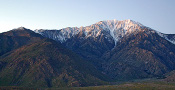


 I think the trail between the peak junction and the peak shelter hasn't been maintained in a very long time. At the boulders, there is a user trail going north that makes a sharp left and heads west towards the peak, with small switchbacks.
 Nobody thinks that. You are the only one. And being the only one is not a special thing in this case.