HH8 wrote:Doesn't it normally lie on its side?
First, let me be clear here. I'm talking about using the Whisperlite Universal with a
canister of gas, typically some blend of one more of the following: butane, isobutane, and propane. I am not talking about using the MSR Whiperlite Universal with a fuel
bottle that contains "white" gasoline (e.g. Coleman Fuel) or kerosene. The W'lite Universal can operate with either a gas canister or a fuel bottle, but in this case I'm speaking specifically about canister gas.
Canister gas stoves normally operate with the canister upright. For example, here is a photo of an MSR Windpro with the canister upright.
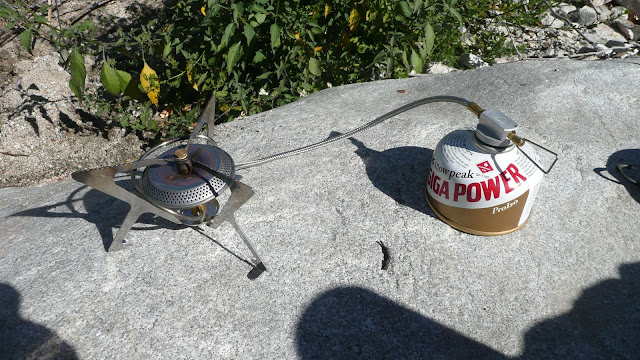
For cold weather, the canister can be inverted (turned upside down). Here is a photo of the same MSR Windpro with the canister inverted.

HH8 wrote: I thought the pressurization feeds gas through the line, not liquid.
You are correct.
Normally, the pressure inside the canister of gas feeds a vapor down the line. This is referred to to as vapor feed mode. However, next time you have a canister of gas handy, shake it. That sloshing sound you hear? That's a liquid. Yes, at room temperature and pressure, the contents of that canister would be a gas, but inside the canister there's so much pressure that the gas liquefies. Now in normal (upright) operation, a vapor is drawn off the top. However, turn the canister over and now the canister's opening is on the
bottom. The pressure in the canister now forces a liquid out the bottom of the canister. This liquid, sometimes referred to as LPG (liquefied petroleum gas), is what goes down the fuel when the canister is turned upside down.
HH8 wrote:How would upside down help in cold weather?
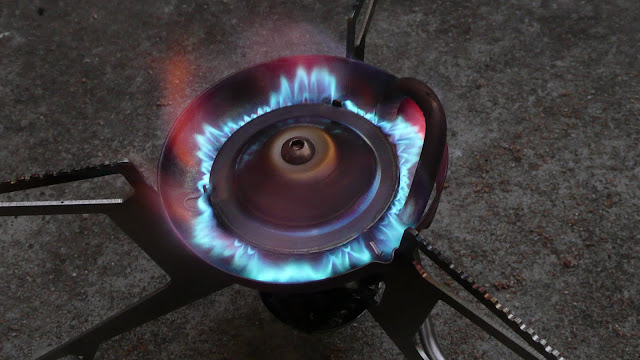
OK, so you've got this liquid in your canister. Gas stoves burn vapor not liquid. How do we turn that liquid into a gas? Basically by heat. In normal weather conditions (above freezing generally), this is no big deal, but it's in cold weather that gas stoves struggle. When we turn the canister upside down, liquefied gas is forced down the fuel line through this loop:

That loop juts
into the flame. The flame provides all the heat we need, and we can cook merrily along in weather where normally that liquefied gas would just sit there.
OK, so that was a long winded explanation, but basically the summary is that by turning the canister upside down, we use the heat of the flame to vaporize the fuel instead of the surrounding air temperature. In normal temperatures this doesn't matter, but if the air temperature is below the vaporization point of your fuel, then the liquefied gas will just sit there, and you've got a dead stove.
Hope that makes sense,
HJ

 Been busy dealing with bugs (ugh!), and I've been working on a little "project".


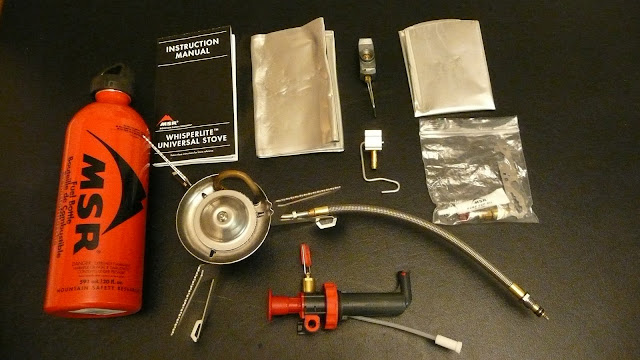
 ). Seems to me that if you wanted to get the high heat output of a white gas stove, why not just use a white gas stove (such as melting snow in winter)?, and use the more-costly-per-BTU canisters stoves for short summer trips where you desire convienience and ease of use (such as boiling water). YMMV.

