In addition to what Guest wrote, if the BLM proceeds with the exchange the public can formally appeal the BLM's decision to higher levels within the Interior Department. If those appeals fail, the public can appeal in U.S. District Court. There is a short window of opportunity after the BLM announces its decision to initiate appeals and litigation.
Hopefully it won't be necessary. Hopefully public political pressure will succeed. If it does not, then hopefully the public will appeal and litigate.
Veterans of similar battles with the BLM say that both political pressure and litigation are often necessary.
Meanwhile, we all need to write to Congresswoman Mary Bono Mack, Interior Secretary Ken Salazar, Senators Feinstein and Boxer by mail or through their websites, and write to John Kalish at the local BLM office to express our concerns about this exchange. Those letters empower our elected officials to apply political pressure on the BLM and they will be useful in court, if or when we go there. In addition, they let the BLM know that the public does not believe this exchange is in our best interests. The BLM is obligated to consider our reaction.
As word of this exchange spreads, the shock, frustration and anger of the public is growing.
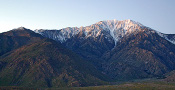
Ultimately this exchange affects more than hikers. It appears to be a lopsided unfair exchange of public land that shrinks the size of a National Monument by seven square miles.
The BLM began working on this exchange more than ten years ago. It only recently caught the public's attention, mainly through the Op/Ed that Gary Leuders was able to get the Desert Sun to publish and through word spreading among hikers.
Under federal regulations the BLM's land exchange process is supposed to be transparent and to involve the public and the government's independent Appraisal Services Division from beginning to end. What is supposed to happen, has not happened in this exchange.
The BLM has an obligation, according to the federal regulations, to "ensure effective public participation" in the land exchange process. That means doing whatever it takes to get the public's attention and to get the public's input and includes things like holding public meetings. Clearly, they have fallen short of this obligation.
In addition, federal regulations require the BLM to involve the government's independent Appraisal Services Division throughout the exchange process to avoid unfair exchanges. In this case, that did not happen either.
The BLM has signed a management agreement with the Tribe that provides continued public access to the trails after the exchange. The problem is that the agreement provides no remedies for noncompliance and can be terminated in one year! The BLM simply has no control over the land after the exchange, with or without a management agreement.
Read the report to Congress on land exchanges by the Congressional Research Service (a Congressional staff organization.) Pay special attention to the issues section on page 5. Their findings are scandalous. They sound eerily familiar to what is happening with the exchange of our lands in the National Monument. The link is:
http://www.policyarchive.org/handle/102 ... s/3999.pdf
We cannot let this happen.
 by Hikin_Jim » Sun Oct 17, 2010 8:54 am