Alan - That was a great link for the over 60 set about Reinhold Metzger.
here is another one which is a bit longer http://www.andrewskurka.com
Here is another http://www.atkinsopht.com/mtn/indrbnen.htm
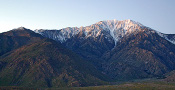
Mt. San Jacinto Outdoor Recreation
Hiking, Climbing, Camping, Trail Running, Snowshoeing...
22,000 ft elevation gain (2 c2c's)
22,000 ft elevation gain (2 c2c's)
 by Cy Kaicener » Tue Apr 24, 2007 5:43 am
. Please visit my website at www.hiking4health.com for more information especially the Links.
http://cys-hiking-adventures.blogspot.com
http://cys-hiking-adventures.blogspot.com
-
Cy Kaicener - Posts: 2236
- Joined: Tue May 09, 2006 3:50 am
- Location: Rialto, California, USA
by cynthia23 » Tue Apr 24, 2007 11:37 am
Getting back to Trumble's question or idea to do Cactus to Clouds then Idyllwild--were you thinking of it as a one-day hike, or an overnighter? As a one-day hike, that too would be very, very strenuous, esp. if you were doing a true C2C (i.e. going to the peak, not "just" the tram.) If "just" going to the tram, it would be do-able, esp. since it's mostly downhill to Idyllwild, but still that would be a long hard day. But if you were planning on doing it overnight and camping somewhere along the way, that too would be quite problematic. The main problem would be carrying a full load of camping gear up Skyline--plus of course a good deal of water, of which you'd probably need even more than the usual 3 liters, as you would be going much more slowly. But then, your weight would be even heavier, which in turn makes you go even slower...you see what I'm getting at--a kind of dangerous feedback loop. I remember a rescue of a guy on Skyline that happened I think last year--the guy carried a full load of camping gear, then got exhausted around sixt thousand feet and spent the night, then of course ran out of water, then of course couldn't continue the last two thousand feet, then, somewhere in the middle of the next dehydrated exhausted day, called to be rescued... I do know some people who've hiked Skyline with full camping gear (i believe Yicchus has) but boy would it be tough, even if you keep your gear very bare-bones. Yicchus is in his twenties and has the classic load-carrier body--he is stocky and unusually strong. The difficulty of Skyline multiplies exponentially with every pound you carry on your back ...still, I'm sure it's possible, just tough. Anyone know anyone who has done this?
The PCT hike--74 to Snow Creek--would not be nearly as problematic, as the PCT is designed specifically to keep its elevation gain modest (although the mileage of course is greater.) I don't know the specifics of where you could refuel for water, though. I'm sure Zip does, though.
The PCT hike--74 to Snow Creek--would not be nearly as problematic, as the PCT is designed specifically to keep its elevation gain modest (although the mileage of course is greater.) I don't know the specifics of where you could refuel for water, though. I'm sure Zip does, though.
Q: How many therapists does it take to screw in a light bulb? A: Only one, but the light bulb has to want to change ...
- cynthia23
- Posts: 1289
- Joined: Tue Nov 07, 2006 3:33 pm
- Location: Rancho Mirage
by AlanK » Tue Apr 24, 2007 1:10 pm
My son always liked the idea of doing a hike from Palm Springs to Idyllwild with a stop at the San Jacinto summit. We never seriously considered it because of the transportation issues (getting from Idyllwild back to Palm Springs).
The Deer Springs Trail would add about 4 miles to the descent (9.5 miles from the peak versus 5.5 back to the tram). The Devil's Slide Trail would add about 2.6 miles to the descent (8.1 miles from the peak versus 5.5 back to the tram).
The Deer Springs Trail would add about 4 miles to the descent (9.5 miles from the peak versus 5.5 back to the tram). The Devil's Slide Trail would add about 2.6 miles to the descent (8.1 miles from the peak versus 5.5 back to the tram).
-

AlanK - Posts: 855
- Joined: Tue May 09, 2006 7:31 am
- Location: Glendale, CA
Nutrition questions
by Ellen » Tue Apr 24, 2007 6:46 pm
Howdy Zippetydude 
I'm happy to answer nutrition questions
If you want an interactive discussion, you can post them to the board.
Miles of smiles,
Ellen
EColemanRD@aol.com
I'm happy to answer nutrition questions
If you want an interactive discussion, you can post them to the board.
Miles of smiles,
Ellen
EColemanRD@aol.com
- Ellen
- Posts: 2578
- Joined: Thu Mar 29, 2007 9:38 am
- Location: Riverside, CA
by zippetydude » Tue Apr 24, 2007 9:58 pm
Okay Ellen, here goes!
1) My stomach doesn't seem to like any solid food once I start running, so I stick to gels and Powerade (with maltodextrin), and they seem to do a really good job. I'm wondering if it shouldn't be possible to mix in the gels and get a simple liquid formula that would remove the necessity for stopping and eating those little gel packets. Do you know some available concoction of sugar/complex carbs/protein I can buy to cover all nutritional needs and skip the "eating" all together?
2) Studies trying to determine the value of protein intake continue to have problems with validity. Some have shown that taking 5 extra grams of protein actually aids in performance, but the difference disappears when 5 extra grams of carbs are used to replace the additional protein. It occurs to me that someone should have found a point of diminishing return with regard to the intake of additional calories, and then substituted 5g of protein at that point to remove the calorie differential. Do you know if this has been done, and if so, did the protein show any performance value?
3) If carbs are all we need to take in during extended runs, why does a burrito or slice of pizza feel so satisfying on top of a mountain? Being such a heavy food, it seems like it ought to cause stomach upset, but as long as I'm heading down (thus removing most of the exertion) I feel great and am glad I ate. Is there a signaling method in the body that generates food-specific hunger to make us desire fats or protein?
4) Just offhand, is there a rough ratio of calorie, respiration, or heart rate requirements for a body going uphill vs downhill? On Whitney last fall, I had to deliberately hyperventilate above 13k just to be able to manage a very slow stagger/run. No surprise. The odd thing was that coming back down, I found I wasn't even breathing hard? Does climbing really require several times the energy expenditure of going downhill? Seems like it ought to be less, but maybe just a little less. Is there some accepted ratio that describes this differenceC
Thanks for any answers you give. I know these are kinda goofy questions, so no pressure!
z
1) My stomach doesn't seem to like any solid food once I start running, so I stick to gels and Powerade (with maltodextrin), and they seem to do a really good job. I'm wondering if it shouldn't be possible to mix in the gels and get a simple liquid formula that would remove the necessity for stopping and eating those little gel packets. Do you know some available concoction of sugar/complex carbs/protein I can buy to cover all nutritional needs and skip the "eating" all together?
2) Studies trying to determine the value of protein intake continue to have problems with validity. Some have shown that taking 5 extra grams of protein actually aids in performance, but the difference disappears when 5 extra grams of carbs are used to replace the additional protein. It occurs to me that someone should have found a point of diminishing return with regard to the intake of additional calories, and then substituted 5g of protein at that point to remove the calorie differential. Do you know if this has been done, and if so, did the protein show any performance value?
3) If carbs are all we need to take in during extended runs, why does a burrito or slice of pizza feel so satisfying on top of a mountain? Being such a heavy food, it seems like it ought to cause stomach upset, but as long as I'm heading down (thus removing most of the exertion) I feel great and am glad I ate. Is there a signaling method in the body that generates food-specific hunger to make us desire fats or protein?
4) Just offhand, is there a rough ratio of calorie, respiration, or heart rate requirements for a body going uphill vs downhill? On Whitney last fall, I had to deliberately hyperventilate above 13k just to be able to manage a very slow stagger/run. No surprise. The odd thing was that coming back down, I found I wasn't even breathing hard? Does climbing really require several times the energy expenditure of going downhill? Seems like it ought to be less, but maybe just a little less. Is there some accepted ratio that describes this differenceC
Thanks for any answers you give. I know these are kinda goofy questions, so no pressure!
z
-

zippetydude - Posts: 2751
- Joined: Tue May 09, 2006 5:40 am
by TRumble24 » Wed Apr 25, 2007 1:28 am
Cynthia - I was thinking of it as a day hike, emphasis on thinking. I would like to do it sometime, including the peak, but I think I would be almost as satisfied just hiking Skyline to tram and out to Idyllwild and just waving at the peak as I pass. I have contemplated the whole gear issue with camping and hiking Skyline before, my best solution was to hire a buddy to meet me at the top tram with gear, but then that sounded too much like cheating to me. I have a bunch of info on the 74 to Snow Creek hike in a hiking book I have, "Backpacking California." Both are treks that are on my list, but there are a couple things that are above them on the list, things like getting back into shape and hiking on a regular basis again. If only there was no work to get in the way...in a perfect world I suppose.
"You may be a little cold some nights, on mountain tops above the timber-line, but you will see the stars, and by and by you can sleep enough in your town bed, or at least in your grave." - John Muir
-
TRumble24 - Posts: 41
- Joined: Sun Jun 11, 2006 12:15 pm
- Location: Morongo Valley, CA
by AlanK » Wed Apr 25, 2007 10:02 am
z -- I can answer the question about energy expenditure. When you walk (or run), you do work against gravity in lifting your legs. When you lower your leg, your cells don't get that energy back to store up, so the calories you burned to lift your leg are gone. Also, considerable energy is lost as heat (your body is about as efficient as a decent engine). So, a 150 pound person burns something like 100 Calories to run a mile.
When you are travelling uphill, you not only lift your leg in order to move, you have to lift your entire mass against gravity. This extra expenditure can easily be on the order of what you burn walking on flat terrain. So you burn a lot more calories going uphill and, again, you don't get to store them back up when you go down., although you obviously use less total energy.
I have some numbers somewhere at home as well as references to articles from the Journal of Applied Physiology that deal with this subject.
When you are travelling uphill, you not only lift your leg in order to move, you have to lift your entire mass against gravity. This extra expenditure can easily be on the order of what you burn walking on flat terrain. So you burn a lot more calories going uphill and, again, you don't get to store them back up when you go down., although you obviously use less total energy.
I have some numbers somewhere at home as well as references to articles from the Journal of Applied Physiology that deal with this subject.
-
AlanK - Posts: 855
- Joined: Tue May 09, 2006 7:31 am
- Location: Glendale, CA
Z-dude's nutrition questions
by Ellen » Wed Apr 25, 2007 10:08 am
Howdy Zippetydude
I've put my responses in a question/answer format:
Q: My stomach doesn't seem to like any solid food once I start running, so I stick to gels and Powerade (with maltodextrin), and they seem to do a really good job. I'm wondering if it shouldn't be possible to mix in the gels and get a simple liquid formula that would remove the necessity for stopping and eating those little gel packets. Do you know some available concoction of sugar/complex carbs/protein I can buy to cover all nutritional needs and skip the "eating" all together?
A. The short answer is yes. You can use “liquid food” products such as InfiniT (www.inifinitnutrition.com) and Spiz (www.spiz.net). Many Ironman triathletes use these on the bike portion of the course. They have a 24 oz fuel bottle, consume part of the fuel bottle every 30 minutes, and wash the liquid food down with water. Liquid food is too concentrated in calories and carbohydrate to double as a sports drink, so you’ll need added water or sports drink to replace your fluid losses.
I’m not surprised that you can’t tolerate solids running – especially on a demanding climb such as Skyline. The higher your heart rate, the lower your absorption and digestion. Compared to cycling, running also causes greater gut distress due to the slapping on the bowel against the abdominal wall. Exercise in the heat also lowers absorption due to higher heart rate – your muscles and skin compete for blood supply and place a greater demand on the cardiovascular system.
The advantage of InfiniT is that you can develop a custom formula. My advice is to try their standard ultra-running distance formula and see how it works for you. Then you can customize if desired.
http://www.infinitnutrition.us/default. ... e%20Orange
Q. Studies trying to determine the value of protein intake continue to have problems with validity. Some have shown that taking 5 extra grams of protein actually aids in performance, but the difference disappears when 5 extra grams of carbs are used to replace the additional protein. It occurs to me that someone should have found a point of diminishing return with regard to the intake of additional calories, and then substituted 5g of protein at that point to remove the calorie differential. Do you know if this has been done, and if so, did the protein show any performance value?
A. Z-dude – I’m very impressed with your knowledge regarding the research on carbohydrate+protein sports drinks versus carbohydrate drinks alone.
You’re right – there appears to be no performance benefit from consuming carbohydrate+protein drinks compared to carbohydrate drinks alone when the feedings provide the same number of calories. I’ve covered this is an article I wrote for Today’s Dietitian (look towards the end of the article): http://www.todaysdietitian.com/newarchi ... pg12.shtml
Practically speaking, consuming a small amount of protein during ultra-endurance exercise (long hikes, ultra-running, long triathlons, adventure races) can provide satiety (you don’t get hungry) and maintain blood glucose levels better than carbohydrate alone. There’s also evidence that consuming a small amount of protein during endurance exercise helps to kick start muscle repair when you’re done exercising.
Q. If carbs are all we need to take in during extended runs, why does a burrito or slice of pizza feel so satisfying on top of a mountain? Being such a heavy food, it seems like it ought to cause stomach upset, but as long as I'm heading down (thus removing most of the exertion) I feel great and am glad I ate. Is there a signaling method in the body that generates food-specific hunger to make us desire fats or protein?
A. In my opinion, no sport food compares to the pleasure of eating “real food” at the summit.
Carbohydrate alone is enough for endurance events lasting less than four hours – marathons, Olympic distance triathlons, 50 mile bike rides, etc. For ultra-endurance exercise (over four hours), carbohydrate is still the primary fuel required but protein and fat provide satiety.
During exercise, you shift blood from the gut to the working muscles. The greater the exercise intensity, the less blood goes to the gut. Ingesting too much food causes the gut and muscles to compete for blood. The result is usually gut shut down – nausea, bloating and even vomiting. As mentioned above, exercising in the heat makes the problem worse.
The key to what you can tolerate is exercise intensity. You eat at the summit and then descend. Lower heart rate descending = greater absorption. Heat is also a factor but not under our control.
Q. Just offhand, is there a rough ratio of calorie, respiration, or heart rate requirements for a body going uphill vs downhill? On Whitney last fall, I had to deliberately hyperventilate above 13k just to be able to manage a very slow stagger/run. No surprise. The odd thing was that coming back down, I found I wasn't even breathing hard? Does climbing really require several times the energy expenditure of going downhill? Seems like it ought to be less, but maybe just a little less. Is there some accepted ratio that describes this difference?
A. Climbing is much harder than descending. For example, running a 7 minute mile on flat ground requires 16.7 calories per minute for a 150 lb person. Running the same pace down a 9% grade requires 11.6 calories per minute. Carrying a load while running uphill will increase the difference even more (couldn’t find calorie expenditure for running uphill).
I would estimate that the energy expenditure running uphill at a given pace is at least twice that going downhill at the same pace.
I naturally start to hyperventilate on Whitney (and I’m only hiking) – usually on the 100 switchbacks. Thank goodness going downhill is easier. Otherwise, as Alan mentioned, being carried down in a plastic bag would occur more often
Miles of smiles,
Ellen
I've put my responses in a question/answer format:
Q: My stomach doesn't seem to like any solid food once I start running, so I stick to gels and Powerade (with maltodextrin), and they seem to do a really good job. I'm wondering if it shouldn't be possible to mix in the gels and get a simple liquid formula that would remove the necessity for stopping and eating those little gel packets. Do you know some available concoction of sugar/complex carbs/protein I can buy to cover all nutritional needs and skip the "eating" all together?
A. The short answer is yes. You can use “liquid food” products such as InfiniT (www.inifinitnutrition.com) and Spiz (www.spiz.net). Many Ironman triathletes use these on the bike portion of the course. They have a 24 oz fuel bottle, consume part of the fuel bottle every 30 minutes, and wash the liquid food down with water. Liquid food is too concentrated in calories and carbohydrate to double as a sports drink, so you’ll need added water or sports drink to replace your fluid losses.
I’m not surprised that you can’t tolerate solids running – especially on a demanding climb such as Skyline. The higher your heart rate, the lower your absorption and digestion. Compared to cycling, running also causes greater gut distress due to the slapping on the bowel against the abdominal wall. Exercise in the heat also lowers absorption due to higher heart rate – your muscles and skin compete for blood supply and place a greater demand on the cardiovascular system.
The advantage of InfiniT is that you can develop a custom formula. My advice is to try their standard ultra-running distance formula and see how it works for you. Then you can customize if desired.
http://www.infinitnutrition.us/default. ... e%20Orange
Q. Studies trying to determine the value of protein intake continue to have problems with validity. Some have shown that taking 5 extra grams of protein actually aids in performance, but the difference disappears when 5 extra grams of carbs are used to replace the additional protein. It occurs to me that someone should have found a point of diminishing return with regard to the intake of additional calories, and then substituted 5g of protein at that point to remove the calorie differential. Do you know if this has been done, and if so, did the protein show any performance value?
A. Z-dude – I’m very impressed with your knowledge regarding the research on carbohydrate+protein sports drinks versus carbohydrate drinks alone.
You’re right – there appears to be no performance benefit from consuming carbohydrate+protein drinks compared to carbohydrate drinks alone when the feedings provide the same number of calories. I’ve covered this is an article I wrote for Today’s Dietitian (look towards the end of the article): http://www.todaysdietitian.com/newarchi ... pg12.shtml
Practically speaking, consuming a small amount of protein during ultra-endurance exercise (long hikes, ultra-running, long triathlons, adventure races) can provide satiety (you don’t get hungry) and maintain blood glucose levels better than carbohydrate alone. There’s also evidence that consuming a small amount of protein during endurance exercise helps to kick start muscle repair when you’re done exercising.
Q. If carbs are all we need to take in during extended runs, why does a burrito or slice of pizza feel so satisfying on top of a mountain? Being such a heavy food, it seems like it ought to cause stomach upset, but as long as I'm heading down (thus removing most of the exertion) I feel great and am glad I ate. Is there a signaling method in the body that generates food-specific hunger to make us desire fats or protein?
A. In my opinion, no sport food compares to the pleasure of eating “real food” at the summit.
Carbohydrate alone is enough for endurance events lasting less than four hours – marathons, Olympic distance triathlons, 50 mile bike rides, etc. For ultra-endurance exercise (over four hours), carbohydrate is still the primary fuel required but protein and fat provide satiety.
During exercise, you shift blood from the gut to the working muscles. The greater the exercise intensity, the less blood goes to the gut. Ingesting too much food causes the gut and muscles to compete for blood. The result is usually gut shut down – nausea, bloating and even vomiting. As mentioned above, exercising in the heat makes the problem worse.
The key to what you can tolerate is exercise intensity. You eat at the summit and then descend. Lower heart rate descending = greater absorption. Heat is also a factor but not under our control.
Q. Just offhand, is there a rough ratio of calorie, respiration, or heart rate requirements for a body going uphill vs downhill? On Whitney last fall, I had to deliberately hyperventilate above 13k just to be able to manage a very slow stagger/run. No surprise. The odd thing was that coming back down, I found I wasn't even breathing hard? Does climbing really require several times the energy expenditure of going downhill? Seems like it ought to be less, but maybe just a little less. Is there some accepted ratio that describes this difference?
A. Climbing is much harder than descending. For example, running a 7 minute mile on flat ground requires 16.7 calories per minute for a 150 lb person. Running the same pace down a 9% grade requires 11.6 calories per minute. Carrying a load while running uphill will increase the difference even more (couldn’t find calorie expenditure for running uphill).
I would estimate that the energy expenditure running uphill at a given pace is at least twice that going downhill at the same pace.
I naturally start to hyperventilate on Whitney (and I’m only hiking) – usually on the 100 switchbacks. Thank goodness going downhill is easier. Otherwise, as Alan mentioned, being carried down in a plastic bag would occur more often
Miles of smiles,
Ellen
- Ellen
- Posts: 2578
- Joined: Thu Mar 29, 2007 9:38 am
- Location: Riverside, CA
by cynthia23 » Wed Apr 25, 2007 10:39 am
This does not relate to nutrition per se, but I saw a fascinating show on PBS, on altitude sickness, which is not well understood. Doctors put radio thermometers inside climbers (the climbers swallowed them and the thermoters were in their guts until they were later, er, expelled.) and then a doctor in a tent monitored the readings as the climbers climbed Denali. The results were astonishing. They found that when the climbers were climbing uphill, on one of the coldest mountains in the world, their core body temperatures rapidly became incredibly high--I think one hundred and five to one hundred and eight. Then, literally within thirty seconds of stopping, their temps dropped something like twenty degrees, down into the low nineties. Then, within a minute of starting again, the temps rocketed up again; then when they stopped, plunged again ...
Of course, it doesn't take a rocket scientist--or an altitude doctor--to figure out that having your core body temperature shooting up and then plunging down, over and over again, is incredibly hard on your body. The show suggested this is one of the main reasons climbers get sick ... of the two climbers being monitored, one indeed did develop pulmonary edema and had to be flown down. The other climber--a woman guide who had done Denali several times before--had somewhat less severe spikes (although they were still quite severe) and so this suggests that your body eventually gets more trained and spikes less. But even the guy who got sick was a hardcore mountaineer, he certainly hadn't just wandered onto the mountain out of a spinning class.
Watching this show gave me even more respect for hardcore mountaineers and the immense physical suffering they go through to make summits. It really is all about managing pain ... it also made me understand why, after climbing Skyline, I often get the chills, sometimes quite severe. Always bring a dry shirt and something warm to put on afterward ...
My nutrition contribution: I don't like consuming gels, etc; they always make me sick. I dislike all the chemicals, artificial flavorings, etc you get with them. Try "Yamsicles". Recipe: bake a yam or sweet potato. Mash filling and scrape it into a piece of tin foil. Wrap and freeze. During hiking, they will slowly defrost. Eat as needed ...
Of course, it doesn't take a rocket scientist--or an altitude doctor--to figure out that having your core body temperature shooting up and then plunging down, over and over again, is incredibly hard on your body. The show suggested this is one of the main reasons climbers get sick ... of the two climbers being monitored, one indeed did develop pulmonary edema and had to be flown down. The other climber--a woman guide who had done Denali several times before--had somewhat less severe spikes (although they were still quite severe) and so this suggests that your body eventually gets more trained and spikes less. But even the guy who got sick was a hardcore mountaineer, he certainly hadn't just wandered onto the mountain out of a spinning class.
Watching this show gave me even more respect for hardcore mountaineers and the immense physical suffering they go through to make summits. It really is all about managing pain ... it also made me understand why, after climbing Skyline, I often get the chills, sometimes quite severe. Always bring a dry shirt and something warm to put on afterward ...
My nutrition contribution: I don't like consuming gels, etc; they always make me sick. I dislike all the chemicals, artificial flavorings, etc you get with them. Try "Yamsicles". Recipe: bake a yam or sweet potato. Mash filling and scrape it into a piece of tin foil. Wrap and freeze. During hiking, they will slowly defrost. Eat as needed ...
Q: How many therapists does it take to screw in a light bulb? A: Only one, but the light bulb has to want to change ...
- cynthia23
- Posts: 1289
- Joined: Tue Nov 07, 2006 3:33 pm
- Location: Rancho Mirage
by AlanK » Wed Apr 25, 2007 11:54 am
The easiest way to think about energy expenditure is that, for a wide range of speeds, it takes you approximately the same number of calories to cover a mile no matter how fast you go. Running does take more calories than walking, but the difference is not huge.
One usually sees charts showing that you burn so many calories per minute at a particular speed, more calories per minute at higher speed, fewer at lower speed. If you divide the expenditure in calories per minute by the speed (in miles per minute), you get almost a constant number of calories per mile. So, I find the typical charts unnecessarily confusing.
Going uphill, the additional calories burned are proportional to altitude gained. In other words, you burn the same number of additional calories to climb 1000' whether you do it in 1 mile, 2 miles, etc. I will add some numbers to this when I find them at home.
One usually sees charts showing that you burn so many calories per minute at a particular speed, more calories per minute at higher speed, fewer at lower speed. If you divide the expenditure in calories per minute by the speed (in miles per minute), you get almost a constant number of calories per mile. So, I find the typical charts unnecessarily confusing.
Going uphill, the additional calories burned are proportional to altitude gained. In other words, you burn the same number of additional calories to climb 1000' whether you do it in 1 mile, 2 miles, etc. I will add some numbers to this when I find them at home.
-
AlanK - Posts: 855
- Joined: Tue May 09, 2006 7:31 am
- Location: Glendale, CA
Return to Mt. San Jacinto & Santa Rosa Mountains
Who is online
Users browsing this forum: Google [Bot] and 4 guests