@ Florian : how long dose it take you to come down? moderate pace?
@ 2600fromatari : nice pictures, that was april?
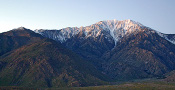
Mt. San Jacinto Outdoor Recreation
Hiking, Climbing, Camping, Trail Running, Snowshoeing...
skyline trail
21 posts
• Page 2 of 3 • 1, 2, 3
 by Ellen » Tue Jan 17, 2012 10:22 am
Howdy 2600fromatari 
Beautiful pictures, thank you for posting Sigh, I miss the snow
I think I probably snowshoed from the tram to the summit once a week when we had those conditions last winter. There's nothing like making tracks in virgin snow.
Howdy 2strokesmoke
Many folks hike up to 4.3 K or 5 K on Skyline and back down several times before going to the tram.
Miles of smiles,
Ellen
Beautiful pictures, thank you for posting
Sigh, I miss the snow
I think I probably snowshoed from the tram to the summit once a week when we had those conditions last winter. There's nothing like making tracks in virgin snow.
Howdy 2strokesmoke
Many folks hike up to 4.3 K or 5 K on Skyline and back down several times before going to the tram.
Miles of smiles,
Ellen
- Ellen
- Posts: 2578
- Joined: Thu Mar 29, 2007 9:38 am
- Location: Riverside, CA
by 2strokesmoke » Thu Jan 19, 2012 9:42 pm
ill be with my nephew, so im thinking to the 3k or there abouts and work our way up from there. he's only 13 but has a lot of energy.
stu
- 2strokesmoke
- Posts: 8
- Joined: Mon Jan 16, 2012 1:26 am
- Location: palm springs
by cynthia23 » Sat Jan 21, 2012 12:49 pm
I commend you for planning ahead and seeking others input. But unintentionally/ironically you've come up with a plan which has a higher-than-average chance of ending up in a rescue situation. I'm going to flat out say that no one should make their first time on Skyline a downhill trip. Going downhill on Skyline is hellacious--in many ways it's harder than going uphill. It's definitely more dangerous. What happens if by four thousand feet your quads are shot (and they will be.) If you have not done this trail before, up or down, it's likely that by about half way down your quads will be shaking badly and no longer fully under your control. Obviously, you can't self-rescue by going uphill. What will you do then? If you stagger on down with blown quads, there's a high chance you'll fall on the many sections of slippery scree (I know, because it's happened to me.) Most of these falls aren't life-threatening, but a few are (people HAVE died on this trail of falls), and certainly broken ankles, hips, and arms, are a likely possibility. Or, even if you don't fall, you may simply be in too much pain, or too exhausted, to continue. Many times while descending Skyline, I have looked for the elevator button to get me the hell out of there, but I have never yet found it. The problem with your alternative way to master Skyline is that your Plan B has no Plan B. Don't do it. It's way too risky.
If you want to do Skyline, follow the normal accepted plan that NeverWas and Ellen suggested, of slowly building up your mileage and gain--i.e. first hike, go up to 5k and come down. If you can't comfortably manage this, in a decent amount of time (8 hours round trip, MAX), you aren't conditioned enough for Skyline, period, and need to spend more time building up conditioning by breaking it down into shorter hikes. Once you can comfortably go up to 5k and come down in 8 hours or less, you're probably good to go for the whole trip. Yes, this plan is tedious and time-consuming, but this is the safe, accepted way to condition for Skyline.
The problem with your alternative way to master Skyline is that your Plan B has no Plan B. Don't do it. It's way too risky.
If you want to do Skyline, follow the normal accepted plan that NeverWas and Ellen suggested, of slowly building up your mileage and gain--i.e. first hike, go up to 5k and come down. If you can't comfortably manage this, in a decent amount of time (8 hours round trip, MAX), you aren't conditioned enough for Skyline, period, and need to spend more time building up conditioning by breaking it down into shorter hikes. Once you can comfortably go up to 5k and come down in 8 hours or less, you're probably good to go for the whole trip. Yes, this plan is tedious and time-consuming, but this is the safe, accepted way to condition for Skyline.
Q: How many therapists does it take to screw in a light bulb? A: Only one, but the light bulb has to want to change ...
- cynthia23
- Posts: 1289
- Joined: Tue Nov 07, 2006 3:33 pm
- Location: Rancho Mirage

by eric1234 » Wed Jan 25, 2012 8:41 pm
http://hiketothetop.blogspot.com/2011/0 ... louds.html
Heres a writeup for Cactus2Clouds, which includes Skyline
Heres a writeup for Cactus2Clouds, which includes Skyline
- eric1234
- Posts: 68
- Joined: Mon Sep 26, 2011 10:04 pm
by cynthia23 » Wed Jan 25, 2012 10:32 pm
While the post you linked to gives clear directions on the route, I was horrified to see that they recommend going in the SUMMER. That's life-threateningly bad advice. Novices should never, ever, EVER go in the summer. In the summer, it's a committed hike, which means that after the first three hours (assuming you leave at 3.a.m.) you cannot safely turn around and go back down, should you get ill or tired. This is the part it's very hard to make novices and out of towners understand. They don't get it. Do it once and you will. The writer of this post didn't have any problems that forced him to come down, so he doesn't understand that he dodged a bullet. I came down--once--in July, and I almost did not make it. I got down by 8.30 a.m., and I was screwed up. Had I been even an hour later, I definitely would have gotten heat stroke. This is how people die. This is how people HAVE died. Never ever go for the first time any time after May. The only safe times for novices are late April/May, or late October/November, assuming there hasn't been early snowfall.
Q: How many therapists does it take to screw in a light bulb? A: Only one, but the light bulb has to want to change ...
- cynthia23
- Posts: 1289
- Joined: Tue Nov 07, 2006 3:33 pm
- Location: Rancho Mirage
21 posts
• Page 2 of 3 • 1, 2, 3
Return to Mt. San Jacinto & Santa Rosa Mountains
Who is online
Users browsing this forum: Baidu [Spider] and 1 guest