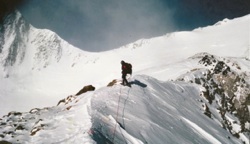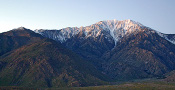

But here is what I learned, especially after watching athletic, 20 something mountaineers demonstrate self arrest and at times struggling. If the skyline traverse is heavily iced, and you slip, I think the chance of arresting yourself before you hit something sharp is very low. Last June when I did C2C I stopped on the traverse at times and looked down at all the sharp things, and realized how close they are. The time it will take to react and slam your ice axe into ice, multiple times (its ice!) to slow yourself, or stop…Im not feeling it. And if you end up in a body position requiring you to twist to plant your ice axe you would have already built up so much speed for a not pretty end.
Thanks to a few of you that “talked me down” when I mentioned trying this last winter, before I had clue 1
 . Not saying I would not eventually do it as the level of packed snow would determine how easily the ice axe could penetrate, but I would have a backup plan involving roping myself off, or a chance for my first skyline almost up/down .
Scott